
End of Empire, End of the Dollar
The Room Is Not Applauding
Look around the room. The U.S. is not projecting strength—it is broadcasting desperation.
Washington chose war with Iran, promised decisive results, and delivered a strategic catastrophe. There was no regime change. Tehran is not weaker; its government has emerged more unified, more hardened, and more legitimate in the eyes of much of its population. The axis Washington claimed it would break—Houthis, Hamas, Hezbollah, and Iran’s wider regional network—has not disappeared. It has adapted.
Hormuz: The World’s Economic Chokepoint
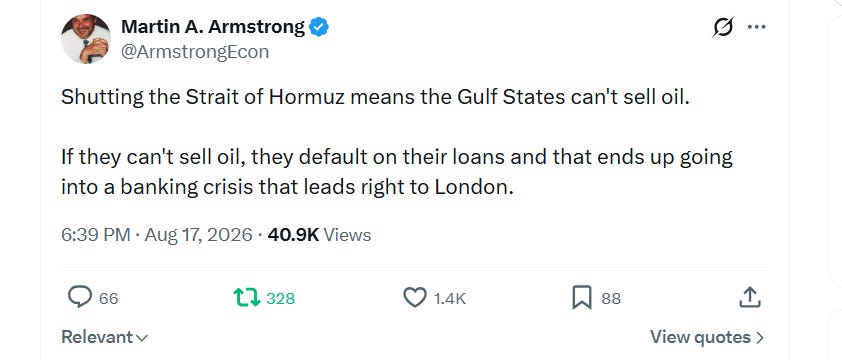
The disruption of the Strait of Hormuz is not a distant geopolitical inconvenience. It is a financial weapon aimed at the arteries of the global economy.
Hormuz is the main export corridor for oil and LNG from Saudi Arabia, the UAE, Kuwait, Qatar, Iraq, Bahrain, and Iran. Roughly one-quarter of global seaborne oil trade passed through it before the conflict, while bypass routes remain limited. When that corridor is choked, Gulf producers cannot simply “find another route.” Revenue falls, debt-service pressure rises, and the losses migrate through regional lenders, European banks, and ultimately the financial plumbing of London.
“Oil Is Flowing” Is Not a Strategy
The U.S. says oil flows are recovering. Independent vessel-tracking data tells a less comforting story: Middle East crude exports remained materially below prewar levels in early August, with observers seeing a gap of roughly 3–5 million barrels per day from official claims.
That is not stabilization. It is rationing dressed up as control.
The War That Made Iran Stronger
And what did America gain? A more dangerous Middle East, a stressed energy market, and a global audience newly aware that the dollar system comes with political strings.
Nations do not need another lecture on sanctions. They have watched what happens when access to the dollar, correspondent banking, reserves, shipping insurance, and trade settlement become instruments of coercion. The message is clear: hold U.S. assets long enough, and someday Washington may decide your savings are a battlefield.
Treasuries: The Weaponized Safe Haven
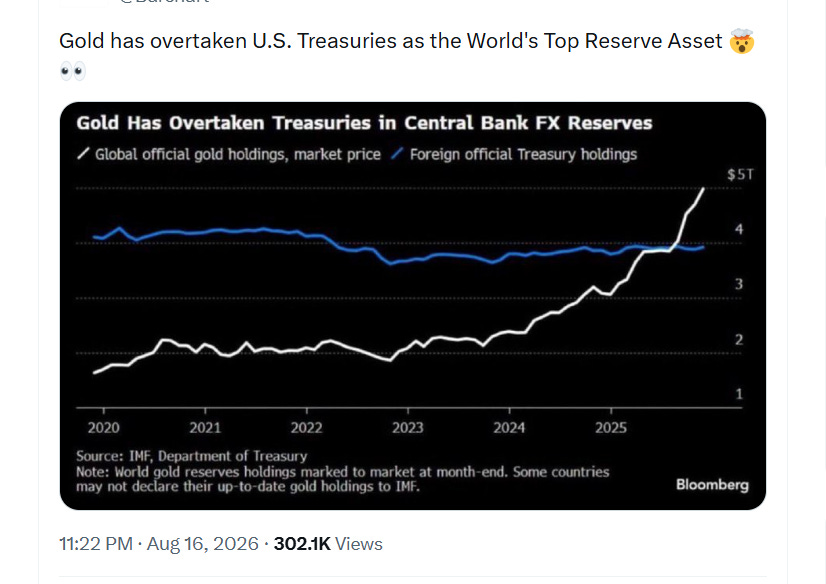
That is why the Treasury market should not be viewed as untouchable. Treasuries are ultimately a claim on a government expanding deficits, weaponizing finance, and spending military capital it can no longer replace cheaply.
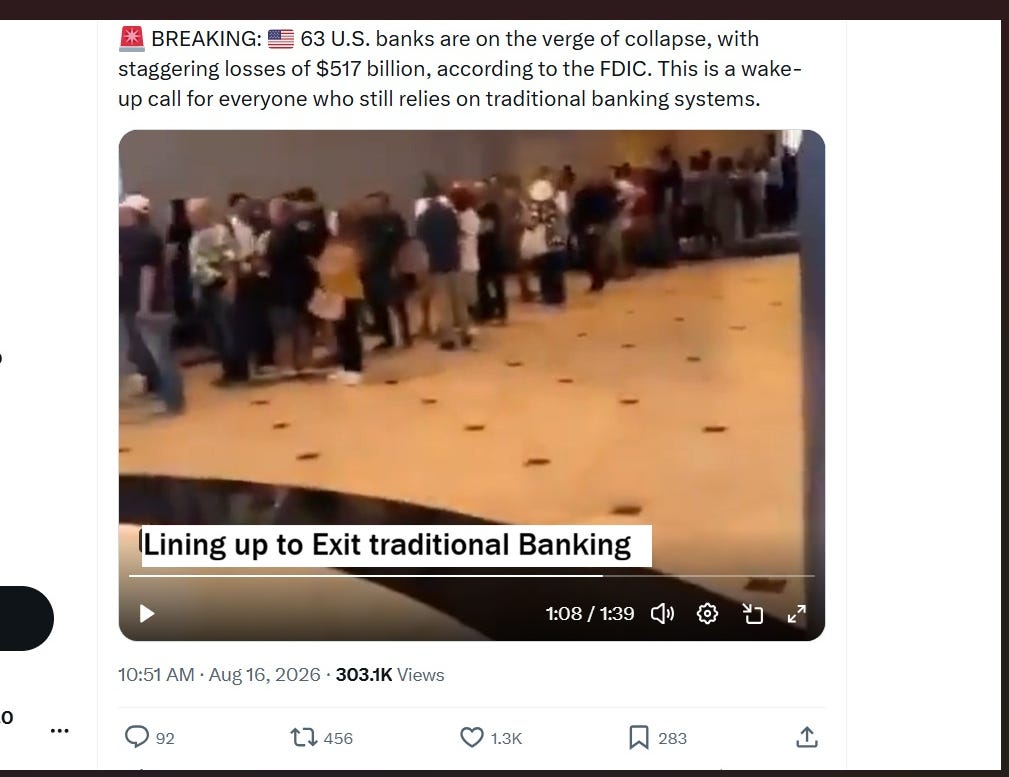
The reported $517 billion unrealized-loss figure for U.S. banks traces to 2024—not proof that 63 banks are collapsing today—but it illustrates the interest-rate fragility embedded in a banking system stuffed with duration risk.
The Bill Arrives Before the Apology
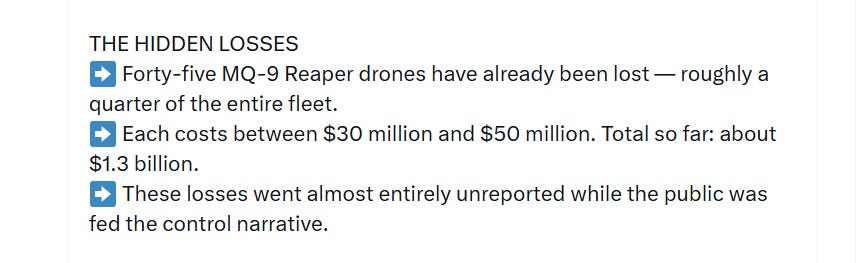
The hidden military losses matter too. Even a $1.3 billion loss of Reaper drones would be trivial compared with the larger truth: modern war burns capital, credibility, inventories, and alliances faster than press conferences can replace them.
Gold Does Not Need Permission
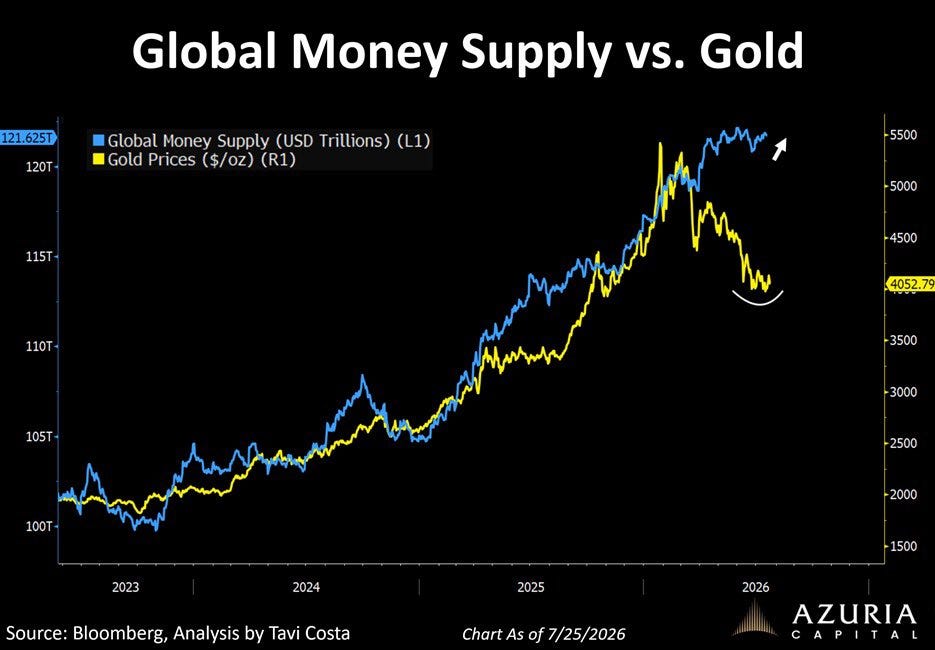
Gold and silver stand outside that political machinery. With global money supply estimated near $121.6 trillion while gold trades near $4,000–$4,400 per ounce, monetary metal has not remotely repriced to the scale of worldwide paper claims.
This is not merely the end of a war. It is the beginning of a global repricing of American power—and the dollar liabilities built upon it
We’ve never seen a divergence like this, gold is about to skyrocket and silver follows her big sister every time (always out performs in fact)
end of segment