
Foreword
Five years ago, four industries barely figured in the conversation about silver’s future: (1) AI hyperscale data centers
(2) Advanced robotics and military drones
(3) Samsung’s silver-carbon solid-state batteries
and (4) eVTOLs—the emerging world of flying cars.
Today, they are opening new fronts in the competition for a metal already stretched between industrial necessity and geological scarcity. Their ambitions are accelerating; silver supply is not. With roughly 820 million ounces mined annually and silver becoming harder to find, tomorrow’s technologies are converging on a resource the mining industry cannot simply produce on command.
Tomorrow’s Technology Is Hunting Silver
The future is arriving in server racks, robotic machines, next-generation batteries and aircraft that rise vertically above city streets. Beneath these seemingly unrelated technologies lies one increasingly important ingredient: silver.
Five years ago, these four industries were not calling on silver the way they are today. Now their ambitions are expanding against a stubborn backdrop: roughly 820 million ounces mined annually, stagnant supply and a metal becoming harder to find.
Technology moves at software speed. Mining moves at geological speed.
Two kinds of data centers
A conventional data center handles websites, business applications and digital storage. An AI hyperscaler is a different beast: a sprawling computational engine packed with accelerators, dense circuitry and power infrastructure.
Both consume silver. AI facilities use considerably more. Conventional data centers use about 60 grams per silver and the hyper scaler server use 180 grams per server.
The distinction matters because counting buildings misses the story. The computing inside them is changing. More powerful, densely connected equipment creates additional demand for the silver embedded in electrical contacts and electronic components. The AI revolution does not happen entirely in cyberspace. It requires physical metal.
Machines enter the battlefield
Robotics is moving beyond factory floors. Drones and autonomous machines are becoming central to military planning, shifting more battlefield functions toward electronically controlled equipment.
Every machine must sense, communicate, process information and manage electrical power. Silver helps make those electrical connections work reliably. Its established applications include contacts and other electronic components.
This is not simply another consumer gadget cycle. It is an expanding category of machines built for environments where failure carries consequences.
A kilogram inside the car
Samsung’s silver-carbon solid-state battery introduces a potentially enormous demand multiplier: one kilogram of silver per vehicle.
Consider the scale. Using 23 million annual electric-car sales as a baseline, five years represents 115 million vehicles. At one kilogram each, that would require approximately 3.7 billion ounces—more than four years of mine output at 820 million ounces annually. That is the scale of the opportunity, not an assumption that every EV adopts Samsung’s design.
Even partial adoption could matter enormously.
Silver takes flight
eVTOLs (flying cars) need the most reliable charge per pound plus silver’s superior conductivity and thermal properties. The stakes are higher (pun intended)
Then come eVTOLs: electric aircraft popularly described as flying cars.
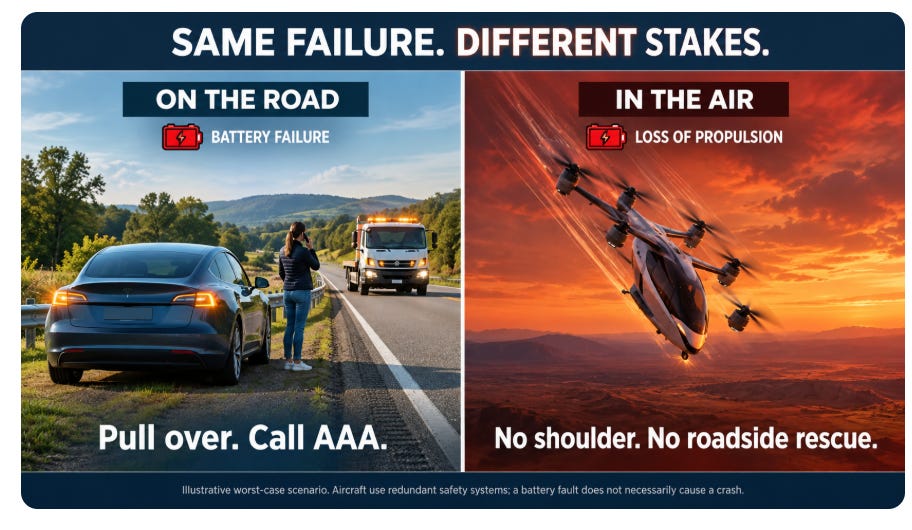
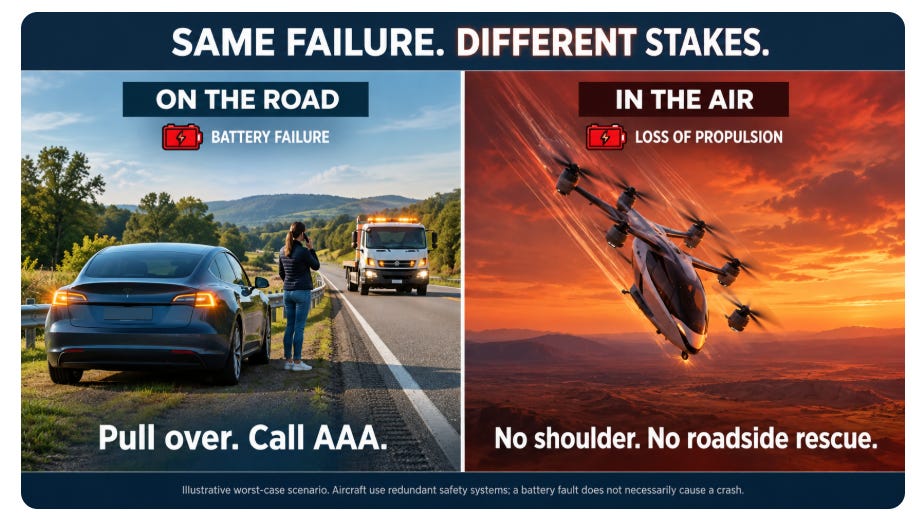
Here, reliable electrical performance becomes nonnegotiable. A disabled car can pull over and call roadside assistance. An aircraft thousands of feet above the ground cannot.
Silver’s conductivity and reliable contact performance make it valuable wherever electrical integrity matters.
Four industries are reaching toward the future. All must confront the same constraint: silver cannot be mined on command.
How to pick a miner?
1. Jurisdiction matters. War and shifting alliances can redraw an investment’s risk overnight. For a strategy prioritizing geopolitical insulation, avoid Mexico and favor jurisdictions with dependable property rights, predictable permitting and secure operations. Political exposure deserves scrutiny before ore grades or production forecasts.
2. Separate primary silver plays from byproduct producers. Buy meaningful silver exposure—not a base metal business wearing a silver label. Check the revenue mix carefully
end of segment
-
our opinions are not our sponsors opinions
-
the editorial department is separate from the promotions department
-
not financial advice