
Foreword:
No modern blunder rivals launching a discretionary Iran war that empowers Tehran, endangers global trade routes, and destabilizes trillions in allied capital while advertising U.S. impotence to the entire world
I. Strategic “genius” that handed Iran the win
a. The U.S.–Israel war machine went in with four maximal goals – regime change, zero enrichment, elimination of long‑range missiles, and cutting off Hamas/Hezbollah/Houthis – and achieved exactly 0 out of 4.
b. Iran walked out with 1 consolidated regime, 1 intact nuclear program, 1 intact missile arsenal, and 3 functioning proxy networks that are now more battle‑tested and politically justified than before.
c. The entire “pressure campaign” produced the opposite of what was sold: instead of regime collapse, you got regime consolidation and a hard lesson for every non‑aligned state that only hard deterrence works against Washington and Tel Aviv.
II. Hormuz: turning the West’s jugular into Iran’s toll road
a. Before this fiasco, Iran did not exercise de facto day‑to‑day control over the Strait of Hormuz; after a few months of Trumpian escalation, Tehran effectively operates a choke point over a sea lane that touches a massive slice of global oil flows.
b. The U.S. spent tens of trillions over decades on carrier groups, bases, and “freedom of navigation” branding, and still ended up in a position where Iran can open or close a toll booth on the world’s energy a few days at a time.
c. Every attempt by Washington to reassert control – airstrikes, ship seizures, blockades – has been met with Iranian tit‑for‑tat: ships seized, brief openings followed by closures, while Western markets price in a permanent Hormuz risk premium.
d. Ships passing through SOH used to pay in petro-dollar now they pay in Chinese Yuan
III. Nukes and missiles: from “we’ll stop them” to “we proved why they need them”
a. Officially, the war was supposed to reduce the chance of Iran ever getting a nuclear weapon; in practice, it produced 1 textbook case study that nuclear deterrence is the only thing that stops a U.S. “war of choice.”
b. Iran’s enrichment and missile infrastructure withstood an air campaign that burned through billions in munitions to change precisely 0 core strategic variables.
c. Net result: 1 regime more convinced it needs a credible nuclear option, multiple peer governments quietly drawing the same conclusion, and 0 evidence Washington can actually disarm a determined mid‑tier power without blowing up the world economy.
IV. GCC sovereign wealth: lighting a $5.4 trillion shock absorber on fire
a. Going into this war, GCC sovereign wealth funds were managing roughly 5.4 trillion dollars in assets, with a major share routed straight into North American and European markets via equities, bonds, real estate, and private deals.
b. These funds were sold as “rainy day” buffers and as investment diplomacy tools bolting Gulf energy exports to Western financial stability; instead they’ve been dragged into emergency mode to manage war‑driven market, FX, and energy volatility.
c. The U.S.–Israel axis didn’t just attack Iran; it attacked the reliability of its own multi‑trillion‑dollar “friendly capital” backstop by turning the very region that produces the surpluses into a war‑risk zone.
V. Dubai: from $1.4 trillion balance‑sheet fortress to front‑line blast zone
a. Pre‑war Dubai’s luxury retail, prime real estate, banking, finance, and energy‑linked corporates collectively sat on the order of 1.4 trillion dollars in market cap and underlying assets – effectively a major offshore balance‑sheet fortress integrated with Western capital.
b. With one war decision, Washington and Tel Aviv converted that 1.4 trillion‑dollar liquidity node into a forward operating theater, forcing every serious allocator to slap higher risk premia on the Gulf’s flagship financial hub.
c. The city that should have been the neutral clearing house and mediator between West and East is now priced as a possible collateral victim of Hormuz shut‑downs, drone strikes, and shipping disruptions.
VI. UAE: from $1.4 trillion into America… to triage
a. In 2025, the UAE signed onto a 1.4 trillion‑dollar, 10‑year investment framework into the U.S. – a giant billboard that said “we trust your institutions, your currency, and your political stability.”
b. Within months of Trump’s Iran war, that same UAE was scrambling to stabilize its own balance sheet and regional exposure as energy flows, trade routes, and asset prices swung violently.
c. The message to the rest of the world is simple: if you pledge 1.4 trillion into America, Washington might reward you by turning your neighborhood into a combat zone and your long‑term capital plan into a bailout discussion.
VII. Military “options”: three instruments, zero workable strategies
a. The U.S. tried the air option first, burning through a massive tonnage of precision munitions; Iran’s state, regime, and core capabilities all survived, so the scoreboard reads Airpower: 0, Strategic Outcome: 0.
b. The ground option was never real: fewer than the necessary number of combat troops in theater, zero political appetite for large‑scale casualties, and a domestic population that panicked over a single downed pilot.
c. The naval option turned into a leaky blockade plus global shipping harassment: limited U.S. ship numbers, rising wear and tear, rising probability of Chinese escorts, and zero evidence the blockade can break Iran before it breaks Western supply chains and insurance markets.
VIII. Proxies: proving the ROI on asymmetric warfare
a. One declared objective was to cut Iranian support for Hamas, Hezbollah, and the Houthis; the actual result is that those three brands are now embedded as three core pillars of Iran’s escalation ladder.
b. Every “firm” U.S. or Israeli move was mirrored: rockets from Lebanon, missiles and drones from Yemen, political leverage from Gaza and beyond – showing that distributed low‑cost assets can neutralize trillion‑dollar arsenals at the margin.
c. Any rational observer has to conclude that Iran’s proxy portfolio generated a positive strategic return on investment, while U.S.–Israeli firepower generated a negative one.
IX. World economy: playing chicken with the global plumbing
a. The global system walked into this already fragile: high debt, uneven post‑pandemic growth, and a commodities complex hypersensitive to supply shocks.
b. Trump and Netanyahu added a war that directly targets two of the world’s most critical maritime chokepoints – Hormuz and the Red Sea – and openly toys with the possibility of shutting both.
c. Iran’s stated fallback is a “we all go down together” strategy: close the Gulf, shut the Red Sea, strike energy and desalination infrastructure, and dare the West to absorb a multi‑trillion‑dollar hit to GDP and markets for a war of choice, not necessity.
X. Diplomacy and credibility: zero deals, infinite arrogance
a. Trump came in bragging he’d settle the Ukraine war fast; years later, there is no grand bargain, only a frozen conflict and a track record of failed summits and broken promises.
b. On Iran, the same team produced zero credible diplomatic off‑ramp, zero coherent endgame, and one giant oscillation between chest‑thumping and last‑minute half‑offers of ceasefires.
c. Add to that the reality that U.S. policy was partially vetoed by a foreign government and its lobby infrastructure, and you have one empire openly admitting its strategic choices are constrained by another state’s domestic politics.
XI. The meta‑lesson: this regime and this currency are counterparty risks
a. For alternative‑finance readers, this is the most high‑resolution demonstration you’re going to get: one U.S. administration, guided by the same permanent security apparatus, can endanger 5.4 trillion dollars of “friendly” Gulf reserves, destabilize 1.4 trillion in a key partner’s pledged investment, and stress another 1.4 trillion in a regional financial hub – all in service of a discretionary war.
b. The war proved U.S. decision‑makers are willing to gamble with global trade arteries, allied balance sheets, and world‑scale financial stability to chase a fantasy of total dominance that their own tools cannot deliver.
c. If they’re willing to do that to their own allies’ capital, their own offshore dollar plumbing, and the real economy, there is no honest excuse left for treating this Trump regime or the U.S. dollar as trustworthy long‑term foundations – only as unstable instruments to be hedged, minimized, or exited while you still can.
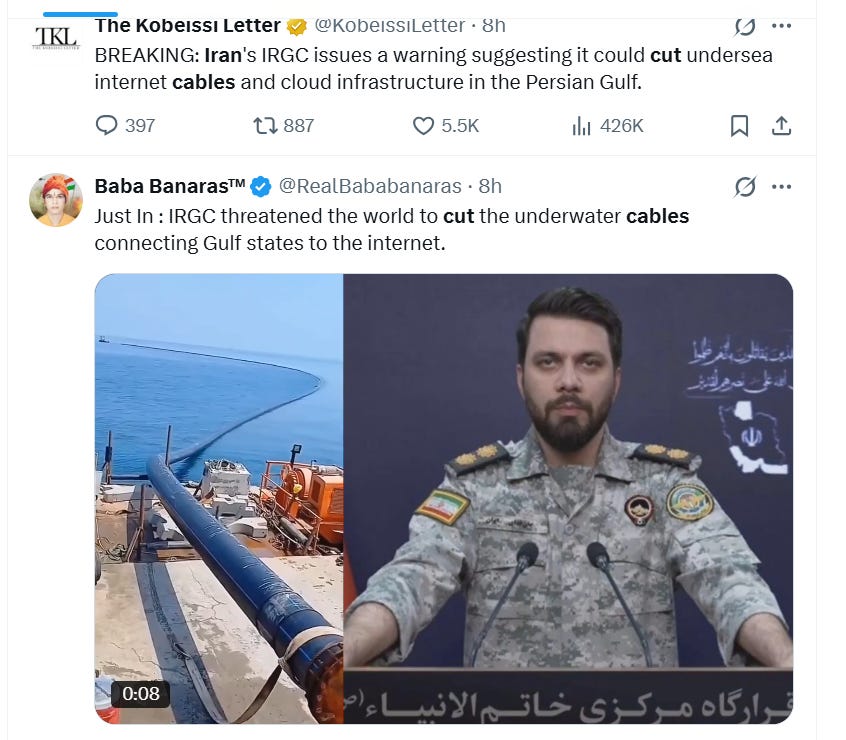
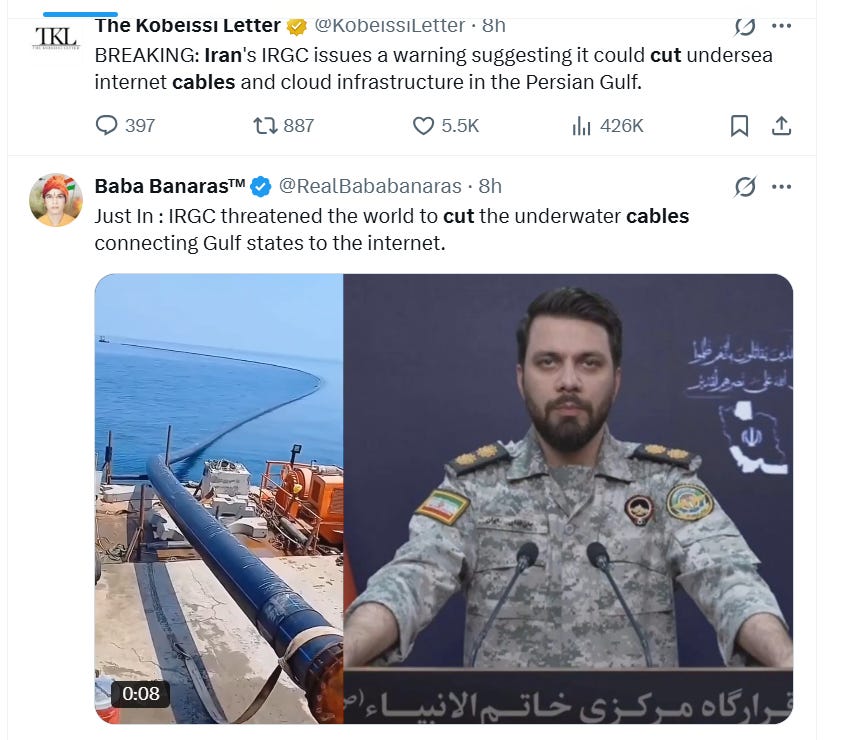
Conclusion: and if this ass kicking wasn’t enough, should Washington and Israel try more illegal and immoral bully tactics then expect this counter measure from Iran who just mopped up the floor with Trump’s orange hair.
Why Silver in this context?
Silver investors gain because Trump has turned “U.S. safety” into a global counterparty risk, forcing capital to seek hard, non‑sovereign assets. When GCC wealth saw roughly 5.4 trillion dollars of assets imperiled by a discretionary U.S. war, that became precedent: if allied reserves aren’t safe, only metal you control is
end of segment
-
our opinions are not our sponsors opinions
-
the editorial department is separate from the promotions department
-
not financial advice